Relaxed Dog: A Designer’s Real-World Embroidery Review
As a designer who’s stitched hundreds of machine embroidery designs for client apparel, boutique merchandise, and Etsy bestsellers, I opened Relaxed Dog with quiet curiosity—not hype. No flashy promo copy, no inflated claims—just a clean folder of 15 file formats (10O, ART, CND, DSB, DST, DSZ, EXP, HUS, JEF, PCS, PEC, PES, TAP, VIP, VP3, XXX) and one unmistakable vibe: calm, confident, quietly charming.
First Impressions: Soft Lines, Strong Presence
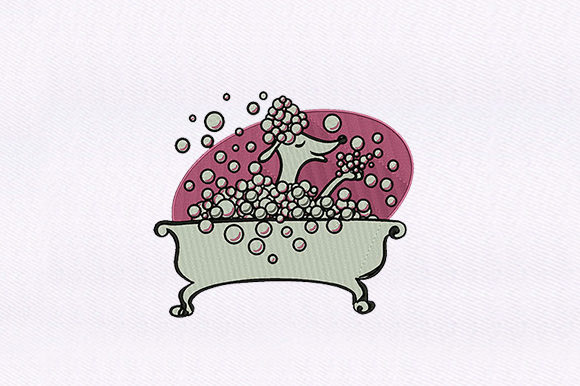
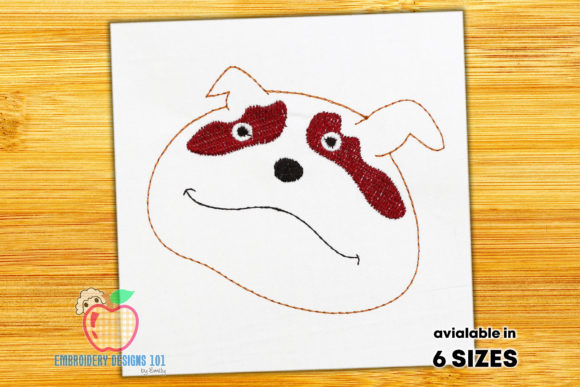
Relaxed Dog isn’t a cartoon pup or a hyper-detailed portrait—it’s a stylized, gently rounded silhouette with subtle contouring, soft ear curves, and just enough facial suggestion to read as friendly, not generic. There’s no tongue, no exaggerated eyes, no busy collar detail—just clean negative space, balanced proportions, and breathing room built into the shape itself. That intentional simplicity is its superpower. It reads clearly at 3.5 inches on a tote bag strap, stays legible at 2.25 inches on a baby onesie chest, and holds warmth without looking cutesy or juvenile.
I immediately pictured it stitched on a heavyweight organic cotton tea towel for a local kitchen shop—no background fill, just the outline and gentle interior shading in matte cotton thread. It felt like the kind of design that doesn’t shout, but makes people pause and smile. That’s rare in dog-themed embroidery, where cuteness often tips into clutter.
Where It Shines (and Where It Asks for Thought)
Relaxed Dog excels in projects where authenticity and tactile quality matter more than flash:
- Custom apparel: On midweight fleece sweatshirts or structured cotton twill caps, its moderate stitch density avoids stiffness while maintaining crisp edges—no puckering, even across seams.
- Tote bag design: Centered on a natural canvas tote, it anchors the piece without overwhelming. The open shape lets fabric texture show through, reinforcing the handmade product feel.
- Baby embroidery: Stitched on gauzy swaddle blankets or soft-knit rompers, its low-fill approach prevents bulk and keeps fabrics drapey and skin-friendly.
- Embroidered patch: When stitched on tear-away stabilizer and finished with merrowed edges, it becomes a versatile, shop-ready patch—ideal for craft fairs or small shop product lines.
- Holiday embroidery & personalized gifts: Paired with minimalist text (“Our Calmest Companion” or a name in clean sans-serif), it elevates holiday stockings or nursery wall hangings without seasonal cliché.
That said—Relaxed Dog isn’t magic on every surface. Use caution on:
- Thin or highly stretchy fabric: Its gentle curves rely on stable tension. Test first on scrap jersey or rayon challis with light cutaway stabilizer.
- Dark fabric with light thread: The design uses subtle interior gradients—not heavy satin stitch. On charcoal or navy, opt for tonal ecru or oatmeal thread instead of stark white for better depth and softer contrast.
- Curved surfaces like structured caps: The lower jaw and ear contours may subtly distort if hooped too tightly. Slightly reduce density (5–7%) in your software or use a cap frame with adjustable pressure.
- Products requiring frequent washing: While stitch density is moderate, always use high-quality polyester thread and test wash a sample. Avoid dense fill areas near seams where abrasion concentrates.
What It Adds to Your Finished Product—Beyond Aesthetics
This isn’t just about how Relaxed Dog looks—it’s about how it makes your customer *feel*. On a custom embroidered pillow cover sold in a boutique, it signals intentionality: not “dog lover,” but “someone who values ease, presence, and quiet joy.” That nuance builds trust. For an Etsy seller, it differentiates listings from mass-produced clipart-style dogs. For a craft business owner, it supports brand consistency—think warm neutrals, natural fibers, unhurried storytelling.
It also performs well in digital spaces. As a digital embroidery file, its clean vector-like structure translates cleanly into printable mockups—no jagged edges or muddy gradients when scaled for social previews or website banners. And because it avoids tiny details (no whiskers, no micro-texture), it remains recognizable even in thumbnail views—a real win for scroll-heavy platforms.
Practical Designer Notes Before You Stitch
Before committing Relaxed Dog to your next project, do these five things:
- Test on scrap fabric—same weight, same weave, same stabilizer you’ll use for the final piece.
- Check thread color contrast in both natural and artificial light; what reads softly in daylight may vanish under store lighting.
- Review stitch density in your embroidery software—especially around the ear base and chin curve—where thread build-up can occur.
- Confirm hoop size; this design fits comfortably in a 4x4 hoop, but verify exact dimensions in your native format before resizing.
- Inspect small details in black-and-white mockup mode—if edges blur or lose definition there, adjust underlay or reduce scale slightly.
And one non-negotiable: Always confirm licensing terms. Since Relaxed Dog is marketed as a machine embroidery design for commercial use, double-check whether resale of finished embroidered items is permitted—and whether digital redistribution (e.g., bundling in a design pack) is allowed. When in doubt, contact the creator directly. Your craft business depends on clean, ethical asset use.
The Bottom Line for Makers Who Care
Relaxed Dog isn’t the loudest design in the room—but it’s the one people remember. It works because it respects fabric, respects the stitch, and respects the person wearing or gifting the finished product. Whether you’re stitching a single personalized gift or scaling production for a small shop launch, it delivers quiet professionalism without sacrificing warmth.
If your work lives at the intersection of handmade product, thoughtful branding, and real-world wearability—Relaxed Dog earns its place in your design assets. Just stitch it with care, choose thread like you’d choose a voice, and let its calm confidence speak for itself.