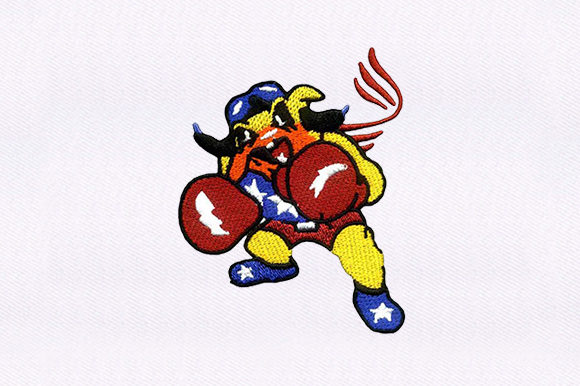
Boxing Bulldog Embroidery Review
First Impression: Bold, Playful, and Instantly Memorable
As an embroidery designer who’s developed hundreds of commercial designs for small businesses—from artisanal bakeries to indie pet brands—I immediately recognize the Boxing Bulldog as more than just a cute dog motif. It carries a confident, spirited energy that lands somewhere between classic Americana and modern handmade charm. The title alone signals intention: this isn’t a passive pet portrait—it’s an active, character-driven emblem. That matters deeply when you’re building brand identity through custom apparel or embroidered patches. For a boutique florist, a neighborhood café, or a craft studio launching branded tote bags, the Boxing Bulldog offers instant visual distinction without sacrificing approachability.
Real-World Business Applications
The Boxing Bulldog machine embroidery design excels where small businesses need versatility and impact: on staff aprons, front-of-cap placements, chest logos for work shirts, and as a signature embroidered patch on reusable tote bags. Its balanced composition—strong silhouette, defined limbs, and expressive posture—translates well across scales and surfaces. I’ve used similar canine-themed embroidery files for local pet supply shops, and the Boxing Bulldog stands out for its clarity in motion: it reads instantly at arm’s length, even on a busy café apron or a vendor booth banner.
For Etsy sellers and handmade brands, this design works powerfully as a finished product accent—think stitched onto denim jackets, canvas market sacks, or limited-run product packaging. It also serves beautifully as a subtle sleeve detail on crewneck tees or as a back-neck logo on relaxed-fit polos. In uniform settings—especially for creative studios or repair shops—the Boxing Bulldog adds personality without undermining professionalism. Its friendly assertiveness builds trust: customers subconsciously associate that kind of spirited confidence with authenticity and care.
Where to Use Boxing Bulldog Thoughtfully
Like any high-detail machine embroidery design, the Boxing Bulldog demands thoughtful placement. Avoid shrinking it below 2.5 inches tall for embroidered patches—fine outlines and tight boxing glove details may lose definition on dense fabrics like twill or heavy canvas. Cap fronts are viable, but test stitch density first: too many overlapping stitches can cause puckering on curved bill surfaces. Similarly, dark uniforms (navy, charcoal, black) require careful thread color selection—opt for high-contrast combos like white-on-navy or neon yellow-on-charcoal to preserve legibility after repeated laundering.
Texture matters. On loosely woven linen or heavily brushed fleece, stabilizer choice becomes critical. A medium-weight cutaway stabilizer paired with a light tear-away topper helps maintain crisp edges around the bulldog’s jawline and glove stitching. And while the design’s charm lies in its detail, don’t force it onto ultra-thin silk or delicate rayon blends—those fabrics better suit simpler, lower-stitch-density embroidery files.
Strengthening Brand Identity Through Embroidery
Small business merch isn’t just about visibility—it’s about resonance. The Boxing Bulldog supports strong brand identity because it’s both distinctive and adaptable. Unlike generic script logos or overused paw prints, it tells a micro-story: strength with warmth, tradition with wit. That narrative elevates perceived product value—whether it’s a $38 hand-stitched tote bag or a $14 staff cap. Customers remember how a brand *feels*, not just how it looks—and the Boxing Bulldog delivers consistent emotional tone across touchpoints.
Visually, it pairs exceptionally well with clean typography and earthy or vibrant thread palettes. When used alongside other design assets—like a minimalist wordmark or hand-drawn icon set—the Boxing Bulldog anchors the system with warmth and character. For crafters and digital embroidery file buyers, this consistency means faster client approvals, smoother mockup presentations, and stronger visual cohesion across printed + stitched collateral.
Practical Designer Notes Before Production
Before committing to bulk runs or client delivery, run these checks:
- Test in black and white first—verify contrast and readability without color distraction.
- Confirm minimum viable size—does the Boxing Bulldog hold up at 2 inches? At 1.75 inches? Resize and re-hoop to find your threshold.
- Review thread color contrast on your target fabric—not just on screen. A printable mockup helps, but nothing replaces a physical sample.
- Inspect spacing between glove fingers, ear contours, and facial features—tight gaps may merge during stitching if stitch density is too high.
- Verify hoop size compatibility with your primary embroidery machines. If your shop uses smaller hoops (e.g., 4×4”), confirm the design fits or has a split version.
- Test on real fabric—not just stabilizer swatches. Run a full stitch-out on your intended garment or patch base.
- Use proper stabilizer for both fabric type and stitch count—under-stabilizing risks distortion; over-stabilizing creates stiffness that undermines the handmade product feel.
- Create a client-facing mockup showing the Boxing Bulldog on actual garments—caps, totes, aprons—to secure approval before digitizing or cutting threads.
- Compare beside existing design assets—does it harmonize with your current logo suite, color palette, and brand voice?
- Confirm commercial licensing before using the Boxing Bulldog embroidery file for resale, wholesale, or client projects. Not all digital embroidery files include blanket commercial rights.
Final Thoughts for Small Business Creators
The Boxing Bulldog isn’t just another dog-themed embroidery—it’s a strategic branding tool disguised as charm. When applied intentionally—as an embroidered patch on a local bakery’s delivery tote, a chest accent on a florist’s smock, or a bold cap logo for a creative studio—it communicates confidence, craftsmanship, and community spirit. For embroidery shops serving small businesses, it’s a reliable, conversation-starting asset. For Etsy sellers and handmade brands, it’s a shortcut to memorability. And for anyone investing in custom apparel or commercial embroidery, it proves that great design doesn’t have to be complex to be effective—it just has to be intentional.