Pink Bow Baby Bib for Small Hoops
A Practical Review for Small Business Embroidery Projects
As an embroidery designer who’s digitized over 2,000 commercial files for boutiques, cafés, florists, pet brands, and Etsy sellers, I approach every new machine embroidery design with two questions: Does it translate cleanly to real-world branded merchandise? and Will it hold up across diverse applications — from cap fronts to tote bag accents? When I first saw the Pink Bow Baby Bib for Small Hoops, my instinct was to pause. The title alone signals a clear niche — Nursery — but its structure and intent suggest broader utility for small business merch. Let’s unpack why.
First Impression: Playful, Handmade, and Purpose-Built
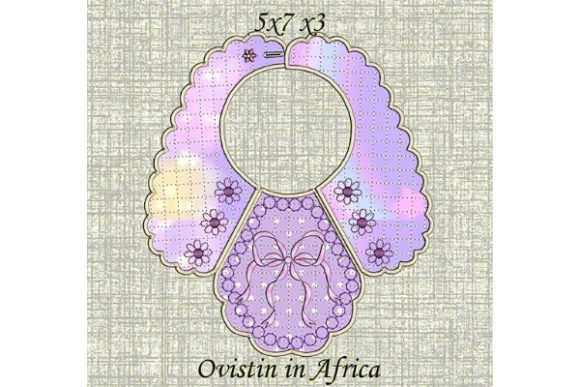
The name Pink Bow Baby Bib for Small Hoops immediately reads as warm, approachable, and intentionally scaled. It doesn’t scream “luxury boutique” or “minimalist studio,” but rather evokes softness, care, and domestic charm — ideal for handmade product branding, baby-focused shops, or lifestyle businesses with gentle aesthetics. The phrase “digitized for ladies with small hoop embroidery machines” tells me this wasn’t rushed. It’s been engineered for accessibility — not just in size, but in assembly logic (three parts, sewn together). That’s a strong signal of thoughtful digitizing, which directly impacts consistency in batch production.
Where It Shines in Commercial Embroidery
The Pink Bow Baby Bib for Small Hoops isn’t just for bibs — it’s a versatile design asset when adapted strategically:
- Embroidered patches: Its three-part construction means clean, low-density sections that stabilize well on twill or felt. Perfect for iron-on or sew-on patches on aprons, tote bags, or staff jackets.
- Apron embroidery: Positioned above the pocket or centered on the chest panel, it adds instant personality without overwhelming functional fabric.
- Cap embroidery: At reduced scale (under 2.5”), the bow remains legible — especially if simplified into a single-layer motif. Ideal for front panels of unstructured caps worn by nursery staff or boutique baristas.
- Tote bag design: As a subtle corner accent or centered below a shop name, it reinforces brand warmth without competing with messaging.
- Product packaging accents: Think stitched tags on organic cotton gift sacks or embroidered labels on handmade soap wraps — the bow reads as artisanal, not generic.
- Customer gifts & event merch: Paired with a local bakery’s logo or a florist’s monogram, it becomes a cohesive, tactile keepsake — reinforcing emotional connection through handmade product sensibility.
Use With Care: Real-World Limitations
While charming, the Pink Bow Baby Bib for Small Hoops requires thoughtful placement. Its layered bow shape and implied dimension mean it may lose clarity at under 1.75” — especially on curved surfaces like cap fronts or sleeve cuffs. Avoid using it where fine detail is critical: tiny lettering isn’t part of this design, but if you plan to add custom text beside it, confirm spacing allows breathing room. High stitch density isn’t indicated in the description, but because it’s built in three parts, overlapping seams could increase density locally — test on your target fabric before bulk runs.
Dark uniforms? Yes — but only with high-contrast thread colors. Pink thread on navy or charcoal works beautifully, but avoid pastel-on-pastel pairings unless your brand intentionally leans into muted tones. Also, textured fabrics (like linen-blend aprons or canvas totes) may require additional cutaway stabilizer to prevent puckering around the bow’s curves.
How It Strengthens Brand Identity
For small businesses, consistency isn’t just about color palettes — it’s about tactile recognition. A well-executed Pink Bow Baby Bib for Small Hoops on an apron, a tote, and a gift tag tells customers: “This is handmade, intentional, and made with care.” That builds trust faster than any slogan. It elevates perceived value — turning a basic cotton bib into a signature item, or transforming a plain tote into a branded experience. And because it’s rooted in the Nursery category yet flexible enough for cross-category use (e.g., a pet boutique repositioning “baby” as “furry baby”), it supports visual storytelling without locking you into one vertical.
Designer Notes You Can’t Skip
Before committing to production, run these checks — every time:
- Test in black and white first: Print a grayscale mockup to assess contrast and balance — no color distractions.
- Verify patch-size legibility: Resize the digital embroidery file to your smallest intended use (e.g., 2” wide) and inspect stitch continuity in the bow loops and knot center.
- Review thread color contrast: Pink thread pops on light backgrounds, but consider rose, mauve, or even burgundy for richer depth on darker apparel.
- Inspect spacing between elements: Ensure the three parts align cleanly when hooped — misalignment will show in finished product.
- Confirm hoop size compatibility: Since it’s designed for small hoops, double-check your machine’s minimum hoop dimensions against the file’s layout notes.
- Test on real fabric: Run a sample on your exact apron fabric or cap twill — not just stabilizer swatches.
- Use proper stabilizer: Medium-weight cutaway is safest for multi-part alignment; tear-away may shift during re-hooping.
- Create a printable mockup: Show clients how it looks on their actual product — helps avoid revision rounds.
- Compare beside other design assets: Does the bow’s weight match your logo’s line thickness? Does its energy align with your brand voice?
- Confirm commercial licensing: This is non-negotiable. If the listing says “for personal use only,” it cannot be used for client work, Etsy shop branding, or wholesale merchandise — even if modified.
The Pink Bow Baby Bib for Small Hoops is more than a nursery staple — it’s a quietly powerful tool for small business merch. When treated as a deliberate design asset — not just a decorative element — it supports authenticity, cohesion, and craftsmanship across every embroidered touchpoint. For embroidery shops, apparel decorators, and handmade brands, that’s not just convenience. It’s competitive advantage, stitched in.