Little Mister May Sailboat Applique
A Craft Fair Designer’s First Look: Sweet, Nautical, and Instantly Recognizable
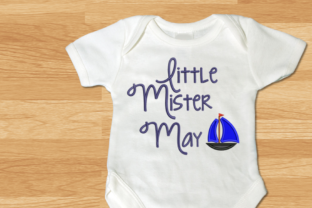
As an embroidery designer who’s prepped over 200 craft fair booths in the past decade, my first impression of Little Mister May Sailboat Applique is strong: it’s soft-cute with a breezy, coastal charm—not too fussy, not too minimal. It lands squarely in that sweet spot between nostalgic and fresh: think vintage postcard meets modern baby registry. The “Little Mister May” text feels intentional and personal, while the sailboat applique adds movement and narrative without clutter. It’s not farmhouse, not boho, not minimalist—it’s beach-adjacent storytelling: gentle, gender-neutral, and quietly joyful. That matters on a crowded craft fair table where customers scroll with their eyes before they stop with their hands.
Where This Design Shines—And Where It Needs Support
Tote bags: A standout. Centered on a natural canvas or oatmeal linen tote, Little Mister May Sailboat Applique reads clearly from six feet away. The lettering scales well, and the sailboat holds visual weight without overwhelming the fabric. Ideal for spring markets or seaside towns.
Aprons and tea towel embroidery: Excellent as a top-corner accent (upper left or right) on striped or solid cotton aprons and flour-sack towels. The design’s balanced proportions prevent visual heaviness—critical when embroidery sits near seams or hems. Avoid placing it low on apron pockets unless using the largest hoop size; smaller versions can blur on textured weaves.
Embroidered patches and fabric pouches: Highly effective. As a sew-on or iron-on patch, this design conveys handmade care instantly. On small drawstring pouches (4"–6"), use the medium hoop size—tiny lettering stays legible, and the sailboat remains distinct. Customers love these as gift add-ons or baby shower favors.
Caps and curved surfaces: Proceed with caution. The sailboat’s clean lines translate well, but the “May” lettering may compress or distort on structured caps unless digitized with curve compensation. Always test-stitch on scrap cap fabric with your preferred stabilizer.
Pillow covers and market bags: Strong focal point at 4.5"–5.5". On linen-cotton blends or duck cloth, the applique adds tactile dimension that photographs beautifully for Etsy listings. Pair it with neutral solids to let the design breathe.
Production Realities: What You’ll Actually Encounter at Your Embroidery Machine
This is a machine embroidery design built for clarity—not complexity. That’s a win. But “simple” doesn’t mean zero friction. Here’s what I check before cutting fabric:
- Stitch density: Applique layers + satin-stitched text mean moderate density—fine for stable wovens, but avoid heavy quilting cottons or thick terry without tear-away + cutaway stabilizer combo.
- Lettering legibility: “Little Mister May” uses friendly, rounded fonts—but below 3" wide, the “t” and “r” can soften on textured tea towels. If selling online, shoot your printable mockup at two sizes: one true-to-hoop, one slightly enlarged for web clarity.
- Hoop size flexibility: With 4 hoop sizes included, you’re covered—from 4x4 for patches to 7x12 for pillow covers. Match hoop to product scale: oversized on a tiny pouch looks unbalanced; undersized on a tote reads like an afterthought.
- Fabric texture & contrast: On dark fabrics, verify thread colors pop—especially the sailboat’s white or light-blue sail. Test stitch on your exact fabric batch. Linen’s slubs can catch fine satin stitches; pre-wash and press thoroughly.
Why This Design Moves Product—Not Just Thread
Little Mister May Sailboat Applique works because it answers unspoken customer questions: Is this made with care? Does it feel special? Will it fit my story? It signals handmade quality without shouting. At a craft fair, it draws parents, grandparents, and gift buyers looking for meaningful, non-generic pieces—especially those drawn to coastal, seasonal, or milestone-themed goods. It strengthens booth cohesion when paired with other “Little Miss/Mister” designs (April birds, June sun), building brand consistency across your small shop product line.
For Etsy sellers, it’s listing gold: searchable (“sailboat embroidery,” “baby month design,” “nautical applique”), emotionally resonant, and highly giftable. Pair it with a simple product title like “Personalized May Birth Month Tote Bag” and watch conversion rise.
Designer Notes You Can’t Skip
Before stitching your first finished product:
- Test the digital embroidery file on scrap fabric matching your intended product—same weight, same finish, same dye lot.
- Check thread contrast under both natural and booth lighting. A pale sail on ivory linen may vanish under tent lights.
- Review spacing between letters and boat—tight kerning helps readability at smaller sizes.
- Confirm your chosen hoop size aligns with your machine’s capabilities and your product’s seam allowances.
- Inspect stitch density in the sailboat’s fill and border—no skipped stitches or thread nesting.
- Use appropriate stabilizer: cutaway for knits or stretchy pouch fabrics; tear-away + lightweight fusible for tea towels.
- Create at least one real-world mockup—not just a digital render. Hang it on your display rack. Step back. Does it hold attention?
- Compare how it looks on light vs. dark fabric swatches. Adjust thread choices accordingly.
- Verify commercial licensing terms. This embroidery file is intended for commercial embroidery use—but always reconfirm before selling finished items.
The Bottom Line for Creative Entrepreneurs
Little Mister May Sailboat Applique isn’t just another craft fair product. It’s a quiet confidence-builder: easy to produce, hard to misread, and rich with emotional resonance. It elevates everyday handmade products—totes, towels, pouches—into keepsakes. For boutique makers and digital sellers, it’s a versatile, seasonally flexible asset that supports storytelling, branding, and repeat sales. Just remember: its charm lies in its clarity. Honor that by testing, adjusting, and presenting it with intention. When done right, it doesn’t just sell—it starts conversations.