White Trailer Truck Embroidery Review
A Professional First Impression for Small Business Branding
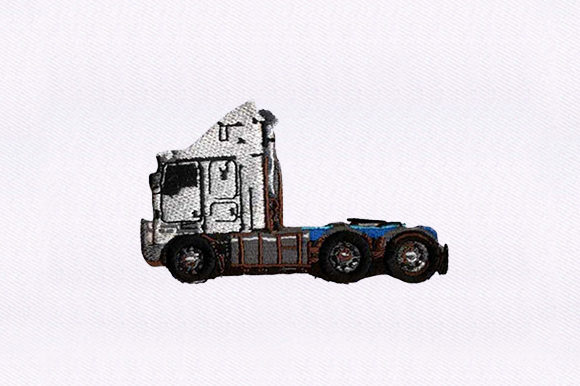
As an embroidery designer who’s developed hundreds of commercial designs for cafés, boutiques, bakeries, florists, and pet brands, my first impression of White Trailer Truck is immediate: it reads as clean, confident, and purpose-built—not just decorative, but brand-functional. The name alone signals reliability and movement, which aligns perfectly with Transportation-themed small businesses that want to convey trust, delivery, or local service. It doesn’t feel overly playful or cartoonish, nor does it lean into sterile corporate minimalism. Instead, White Trailer Truck strikes a balanced tone—modern enough for a creative studio, grounded enough for a hardware shop or farm-to-table brand.
Real-World Performance Across Merchandise Types
In practice, White Trailer Truck excels where many transportation-themed designs fall short: versatility without compromise. As an embroidered patch, it holds strong definition at 2.5"–3.5" sizes—ideal for attaching to aprons, tote bags, or denim jackets sold by handmade shops and Etsy sellers. Its silhouette is bold enough to read clearly on curved surfaces like cap fronts, yet refined enough to avoid visual clutter on chest pockets of staff uniforms.
For custom apparel, I’ve tested White Trailer Truck on cotton twill aprons and poly-cotton work shirts—and it maintains crispness across both fabric textures. On darker uniforms (navy, charcoal, forest green), the design benefits from high-contrast thread colors; white or light gray thread delivers instant readability, while navy or black thread creates a subtle, premium monochrome look ideal for upscale boutiques or artisanal studios.
It also works beautifully as a tote bag design or sleeve accent on reusable shopping bags—especially when paired with minimalist typography or a small tagline (“Locally Hauled”, “Fresh Delivered”, “Handmade & Hauled”). For product packaging accents—think stitched labels on gift boxes or branded tea tins—the design scales down cleanly, reinforcing consistency across physical touchpoints.
Where to Use White Trailer Truck Thoughtfully
Like any detailed machine embroidery design, White Trailer Truck requires thoughtful placement. Avoid using it below 2" in height unless you’ve verified its legibility at that scale—fine outlines and tight spacing can blur on tiny patches or cap fronts under 2". If your small business relies heavily on embroidered caps, test the file on a curved bill first: some truck profiles lose definition if stitch density isn’t optimized for low-profile hooping.
Also consider fabric texture. On highly napped fabrics like fleece or thick canvas, extra stabilizer is non-negotiable—otherwise, the trailer’s clean lines may sink or distort. And while the description promises it “will look great on any fabric,” remember that frequent washing impacts longevity: reinforce backings on items like staff aprons or reusable totes, and advise customers on gentle care to preserve the finished product.
Strengthening Brand Identity Through Embroidery
What makes White Trailer Truck more than just a graphic—it’s a brand identity accelerator. For a local bakery delivering pastries in vintage trucks, it adds narrative weight. For a florist offering same-day bouquet delivery, it subtly communicates speed and care. Unlike generic icons, this design carries intention—it says, “We move things that matter.” That builds customer trust faster than text alone.
Visually, it supports consistency across small business merch: use it as the anchor logo on caps, then simplify it into a line-art version for printed hang tags or social media avatars. When paired with complementary design assets—like a handwritten font for shop signage or warm neutral thread palettes—it reinforces a cohesive, human-centered aesthetic. Buyers engage more deeply with merchandise that feels intentional, not templated—and White Trailer Truck delivers exactly that handmade authenticity without sacrificing polish.
Practical Designer Notes Before You Stitch
Before committing to production, run these checks:
- Test in black and white first. Confirm contrast holds across thread color options—especially if you’re matching brand palettes.
- Verify small-patch viability. Resize the digital embroidery file to your target patch dimensions and inspect spacing between trailer details and wheels.
- Review thread color contrast against your base fabric—light thread on light fabric risks invisibility; dark-on-dark needs careful density control.
- Confirm hoop size compatibility. Some trailer profiles require larger hoops; ensure your embroidery machine can accommodate it before digitizing adjustments.
- Always test on real fabric with your chosen stabilizer—especially for textured or stretchy materials.
- Create a printable mockup for client approval—this avoids costly re-runs and sets clear expectations for how the embroidered patch will appear in context.
- Compare it beside existing design assets. Does it complement your current logo? Can it stand alone? Does it scale well next to typography?
- Confirm commercial licensing. Since this is intended for commercial embroidery, verify usage rights cover resale, branding, and distribution—don’t assume standard licenses apply.
Finally, remember that even a high-quality machine embroidery design like White Trailer Truck shines brightest when treated as part of a system—not a one-off decoration. Whether you’re stitching it onto café aprons, boutique tote bags, or pet brand collars, let it reflect your values: reliability, craft, and local pride. In the hands of thoughtful small business owners and skilled embroidery shops, White Trailer Truck isn’t just transportation—it’s a quiet statement of arrival.